
Collaborated with the energy and waste company HEM,
to develop a service aimed at encouraging and facilitating
sustainable travel choices among tenants.
Handed by HEM, to create a concept of a service, that in one way or another, provides value regarding sustainability focusing on the travel behavior of tenants
METHODS
Flowchart, Affinity Diagram, Customer Journey Maps (Current & Future states), Desktop Research, Service Blueprints, Surveys, Interviews
TOOLS
Miro, Google Surveys, Excel, Canva
Our service should provide sustainability values for travel behavior of tenants. We chose to create a bikepooling solution for tenants to provide value regarding sustainability by addressing the travel needs of tenants through a bike-sharing system.
Sustainability Focus: The service is designed to enhance sustainability by encouraging eco-friendly travel options.
Bike-Sharing System: A bikepooling solution specifically created to address the travel needs of tenants.
Tenant-Centric Design: The concept is tailored to the travel behaviors and needs of tenants, ensuring it is relevant and practical for them.
Value Creation: The service aims to provide significant value in terms of sustainability and convenience for tenants.
Environmental Impact: Tenants can reduce their carbon footprint by choosing an eco-friendly mode of transportation.
Convenience: The bikepooling system offers an easy and accessible way for tenants to travel, potentially reducing reliance on cars and public transport.
Health Benefits: Encourages physical activity, promoting a healthier lifestyle among tenants.
Community Building: Shared biking can foster a sense of community among tenants, as they participate in a common sustainable practice.
Based on our research, by 2050, half of all travel is projected to be sustainable and surface effective. At least 21% of all transportation will be by bicycle. Halmstad, with a population of 105,796, includes 54,157 people in the workforce and 3,656 high school students as of 2022.
We conducted a survey among different groups, including Halmstad University students, and interviewed tenants from real estate companies to understand travel behaviors. Results showed that 85% travel by walking or cycling due to short distances. Most respondents live in Halmstad, preferring these methods for convenience and sustainability. Only 24% regularly think about sustainability, yet those who do primarily walk, cycle, or use public transport. Interest in a bike-sharing service was noted, with some preferring it over car usage due to cost and environmental concerns.


We created a stakeholder map to identify key stakeholders, their resources, and influence. This helped us understand potential risks and conflicts. The map categorized stakeholders into three layers:
1. The inner circle (end users)
2. The middle layer (core interests)
3. The outer layer (indirect stakeholders)
This visualization allowed us to focus on the right actors and explore how they can create value for tenants. Another map included all internal and external stakeholders affected by the project.


Our Interaction Model describes the relationships for the tenants and real estate companies with our service. However, in our Interaction model we have added HEM to see how they are related to the tenants and real estate companies, and also see what they all three have in common
We conducted a SWOT analysis to evaluate real estate companies' mobility and transportation use. The analysis identified their main weakness as limited access to transportation options, such as nearby bus stops and rentable scooters, which reduces tenants' motivation to use sustainable transport. This often leads tenants to prefer cars, negatively impacting sustainability. A potential threat identified was the risk of companies ceasing collaboration with real estate firms. Understanding these strengths, weaknesses, and threats allowed us to plan preventive measures effectively.

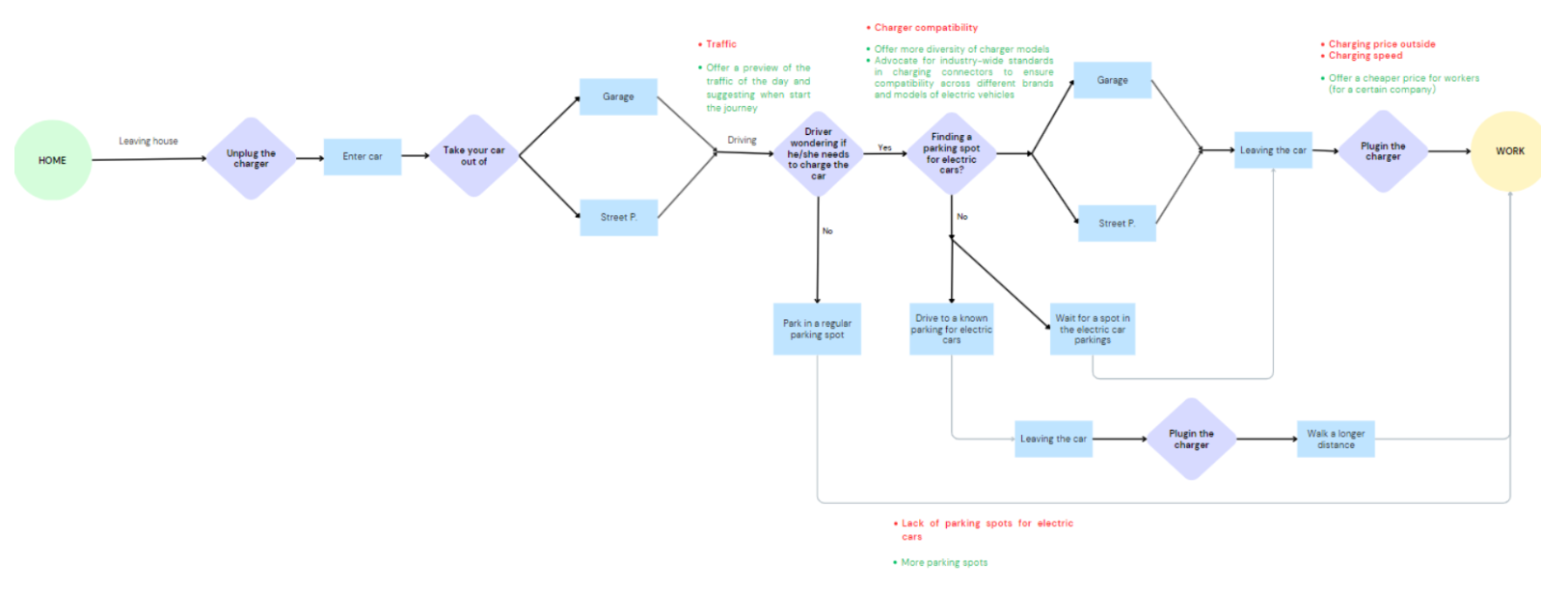
Process modeling visualizes specific processes to understand them better. We created current state models for bike and car usage based on our research and observations. These models highlighted pain points in commuting as a tenant, helping us to identify and address issues to make our service more user-friendly and attractive.


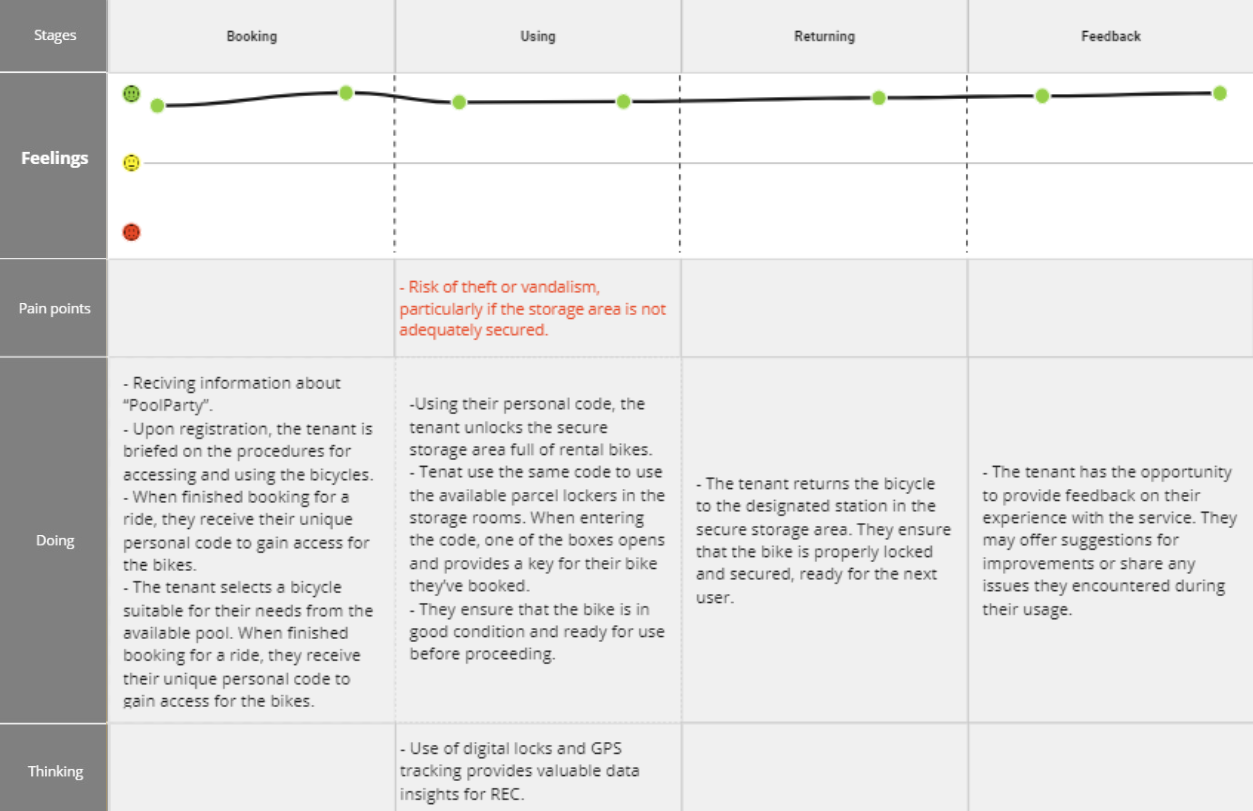
The current Customer Journey Map illustrates the tenant’s existing process when traveling to a location, crucial for understanding their actions, feelings, and thoughts at each touchpoint. Similarly, a future Customer Journey Map has been developed to outline the phases of the proposed solution. This updated map details service phases and draws conclusions, helping identify new critical points and devise corresponding solutions.

To present our service effectively, we created service blueprints that outline tenant interactions and necessary backstage actions. The first Service Blueprint guides through discovery, consideration, action, and post-action steps, detailing the customer journey, front and backstage processes, support mechanisms, and opportunities. The Second one highlights the actions required for both tenants and Real Estate Companies, emphasizing recurring support processes and value-adding opportunities. This comprehensive approach gives HEM and Real Estate Companies in-depth information on backstage requirements, aiding in effective implementation.